

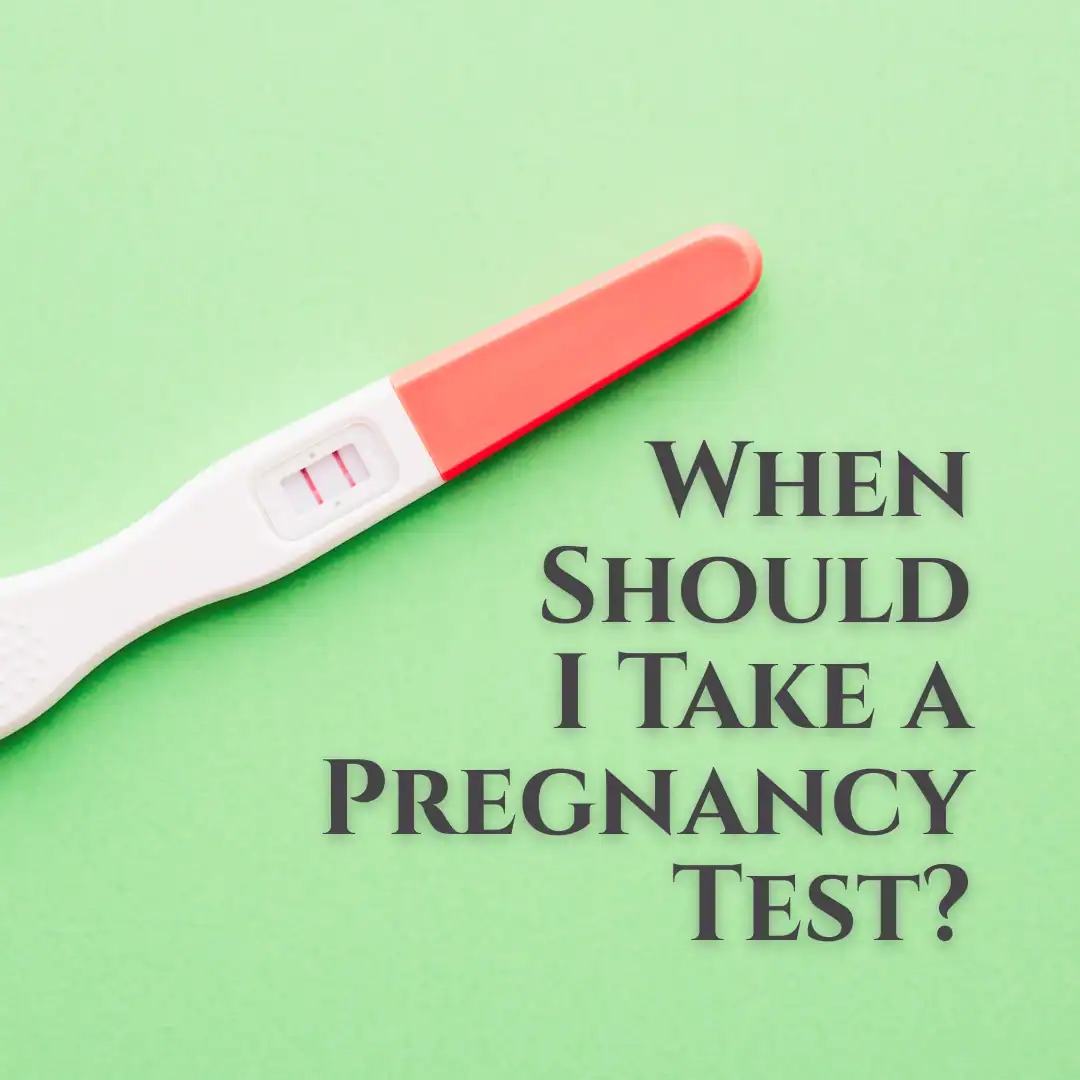
If you think you might be pregnant, one of the first questions that probably pops into your mind is: When should I take a pregnancy test? Taking a test too early can lead to confusing results, while waiting too long can leave you stressed and uncertain. Understanding how pregnancy tests work, and when they’re most accurate, can help you get clear answers sooner. This guide explains when to take a pregnancy test, how the tests work, and what to do next depending on your results.

How Pregnancy Tests Work
Pregnancy tests detect a hormone called human chorionic gonadotropin (hCG) in your body. This hormone starts being produced after a fertilized egg attaches to the lining of the uterus, a process called implantation.
Most at-home pregnancy tests check for hCG in urine. If hCG is present at a high enough level, the test will show a positive result. If the hormone level is too low, the test may show negative—even if you are actually pregnant.
According to the U.S. Food and Drug Administration, hCG levels increase rapidly during early pregnancy, which is why timing matters when taking a test.
The Best Time to Take a Pregnancy Test
The most reliable time to take a pregnancy test is after you miss your period.
Many pregnancy tests claim they can detect pregnancy several days before a missed period, but results are more accurate if you wait until the first day of your missed cycle. By that point, hCG levels are usually high enough for a home test to detect. The Mayo Clinic notes that waiting until after a missed period reduces the chances of a false negative result.
A Simple Timeline
Here’s a general idea of how timing works:
- 0–6 days after sex: Too early for a pregnancy test
- 7–10 days after ovulation: Implantation may occur
- 10–14 days after ovulation: hCG begins increasing
- After a missed period: Best time to take a pregnancy test
If you take a test earlier than this, it may not detect the hormone yet.
Signs You Might Want to Take a Pregnancy Test
A missed period is the most common reason people take a pregnancy test, but it’s not the only one. Some early pregnancy symptoms can show up before you even miss your period.
Possible early signs include:
- Missed or late period
- Nausea or vomiting
- Fatigue
- Breast tenderness
- Frequent urination
- Light spotting (sometimes called implantation bleeding)
- Mild cramping
It’s important to remember that these symptoms can have other causes, including stress, illness, or hormonal changes. A pregnancy test is the only reliable way to know for sure.
What Happens if You Test too Early?
Taking a pregnancy test too soon can lead to a false negative. This means the test says you’re not pregnant even though you actually are. This happens because hCG levels may still be too low to detect.
If you test early and get a negative result but still think you might be pregnant, experts recommend waiting a few days and testing again. The Cleveland Clinic explains that repeating the test after several days gives hCG time to rise to detectable levels.
Tips for Getting the Most Accurate Results
If you’re taking a home pregnancy test, these tips can help improve accuracy:
- Test in the morning. Morning urine often has the highest concentration of hCG, especially in early pregnancy.
- Follow the instructions carefully. Each brand of test has slightly different directions. Reading the instructions helps prevent errors.
- Check the expiration date. Expired tests may not work correctly.
- Wait the full time for results. Most tests take about 3–5 minutes to show results. Reading the test too early or too late can lead to confusion.
What to Do if your Test is Positive
A positive pregnancy test only tells you that you are pregnant due to detecting the hCG hormone. Your next step should be to get an ultrasound to confirm three important details about your pregnancy. An ultrasound can help determine:
- Whether the pregnancy is located in the uterus
- How far along the pregnancy may be
- Whether the pregnancy is progressing
Confirming the pregnancy with an ultrasound will help you better understand all the options available to you.
What if the Test is Negative?
A negative test can mean several things:
- You are not pregnant
- You tested too early
- Your cycle is irregular
If your period still doesn’t start within a week, consider taking another test. If you continue to have unusual symptoms or concerns, it may be helpful to talk with a healthcare provider.
You Don’t Have to Figure it Out Alone
Waiting for pregnancy test results can feel stressful, especially if you’re young and unsure what to do next. Whether your test is positive or negative, Hope’s Pathway Chatham is here to talk through the many emotions you may be feeling.
You don’t have to navigate this by yourself. Along with free pregnancy testing, we provide no cost limited ultrasound referrals if your test is positive and a caring team to listen confidentially and answer your questions without judgment.
Take the first step toward finding hope and figuring out what’s next. Contact us today to schedule your free appointment.
Sources
- U.S. Food and Drug Administration. Pregnancy Tests. https://www.fda.gov
- Mayo Clinic. Home Pregnancy Tests: Can You Trust the Results? https://www.mayoclinic.org
- Cleveland Clinic. Pregnancy Tests: When to Take One. https://my.clevelandclinic.org
- American Pregnancy Association. Pregnancy Tests: How They Work. https://americanpregnancy.org